
MVP Development for Startups
A first version small enough to finish and real enough to prove the idea — usually in 8 to 14 weeks.

An MVP is not a cheap version of the product. It is the smallest build that answers one question honestly: do the people you are building for actually use this? Everything that does not help answer that question is deliberately left out of the first release.
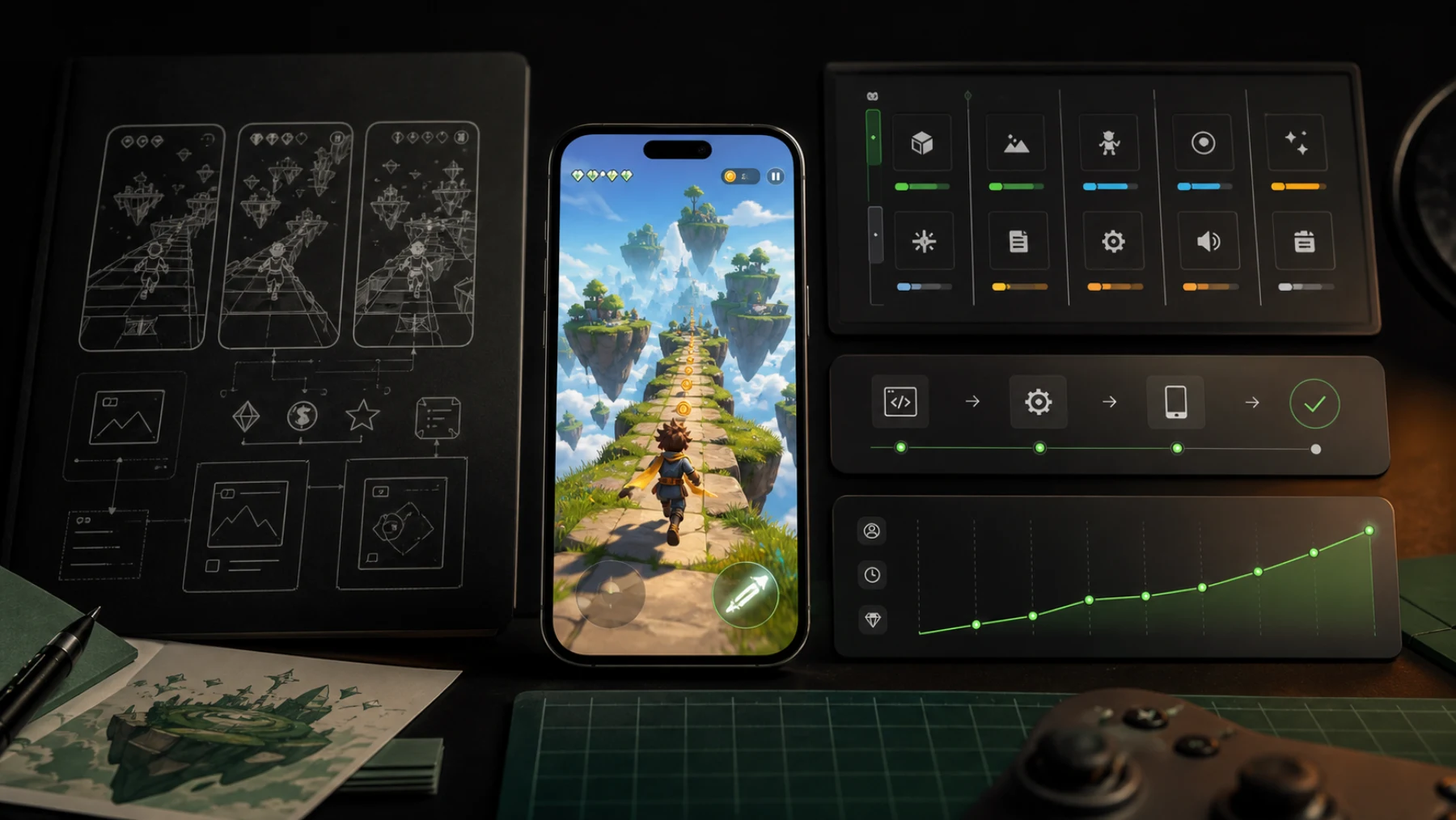
Before development begins we help define the required functionality, the user journey, the project scope and the technical requirements. This structured approach reduces unnecessary development, controls costs and helps prevent projects from expanding beyond the original objectives.
We pressure-test the concept against the audience, the competition and the technical reality before estimating anything.
A written feature list with a hard boundary. Everything outside it is documented as “phase two”, not silently dropped.
Wireframes and a clickable prototype you can show to real users, investors or your own team before a line of code.
A production-quality build — not a throwaway demo. Clean architecture that survives the next funding round.
Funnels, cohorts and events instrumented before launch, so the first week produces evidence instead of opinions.
Store listings, creatives, submission and a staged rollout — handled for you, including review responses.
Exact dates come from the scoping session — this is what the shape of the project usually looks like.
We separate what proves the idea from what can wait. The output is a feature list with a hard boundary around it.
User journey, wireframes and a clickable prototype you can put in front of real people before development starts.
Two-week sprints with an installable build at the end of each. Analytics are wired in from the first sprint.
Device testing, performance work and the boring reliability tasks that decide your first store rating.
Store submission, staged rollout and the first cohort report — the numbers you actually take to investors.
A first release usually means a single core loop, one visual biome and one meta system — plus the analytics needed to prove it works. Everything else is documented for phase two instead of quietly eating the budget.
Everything produced during the project belongs to you from the first commit, including the parts you would need to hire a different team tomorrow.